
When most people think of cork, they probably imagine wine bottle stoppers. However, in
recent years, growing environmental awareness has led builders and homeowners to consider
using cork for other purposes. Cork is a building material that is hard to beat—it’s waterproof,
fire-resistant, and mold-resistant. Cork is also an excellent insulator due to its superb thermal
properties. Furthermore, using cork is both sustainable and environmentally friendly. As a
result, cork’s value cannot be denied. Want to learn more? Here’s what you need to know
about cork.
Where Does Cork Come From?
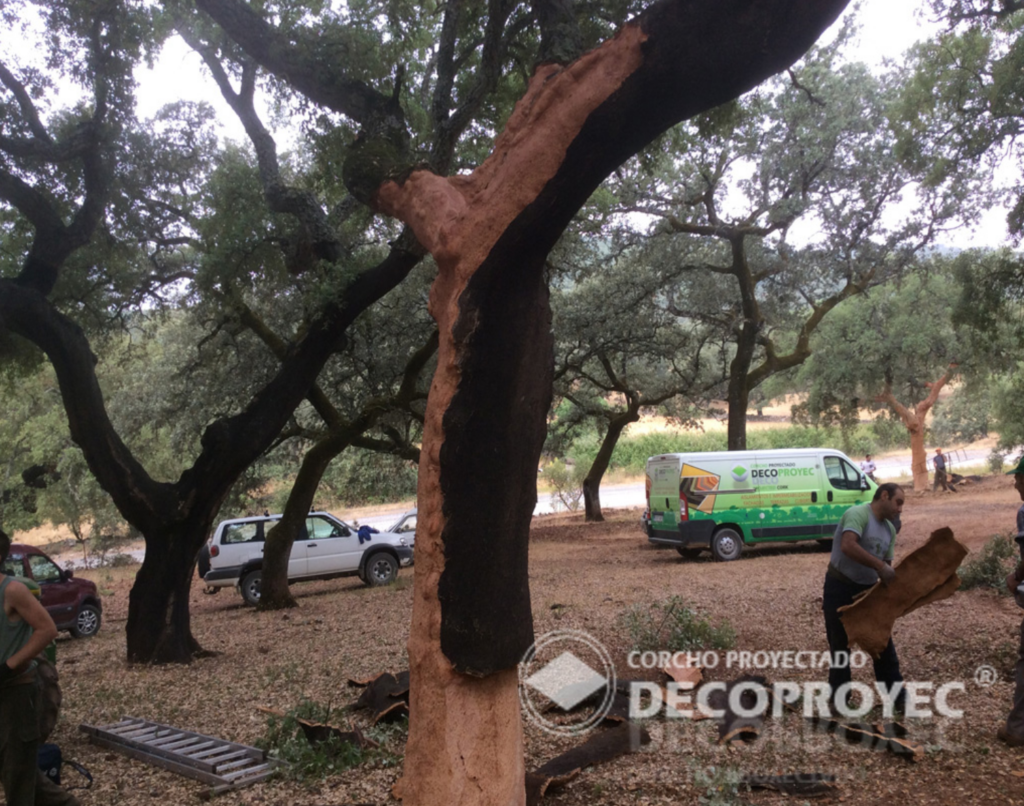
Cork is harvested from cork oak trees, primarily found in the Mediterranean region.
According to the Cork Forest Conservation Alliance, there are about 6.6 million acres of cork
oak forests in Portugal, Spain, Italy, and France. These forests are among the most biodiverse
habitats on earth, second only to the Amazon rainforest. The greater the demand for cork
products, the more cork oak trees will be planted, keeping the forests healthy and robust. Cork
oak forests provide a safe haven for thousands of species, including the critically endangered
Iberian lynx, which lives only in southwestern Europe.
How is Cork Harvested?
Many trees are cut down to clear land for cattle grazing or to be used in paper products and
building materials. Cork oaks are unique because they can be harvested without killing the
trees. These amazing trees can live up to 300 years! A mature cork oak can be harvested every
nine years. Harvesting is done by hand using traditional tools. The average farmer trains for
about eight years to harvest cork and is among the best-paid agricultural workers in Europe,
making this industry both socially and environmentally conscious. After harvesting, the cork
bark regenerates, much like shearing a sheep does not harm it.
How Are Cork Products Made?
Cork boards are sent to manufacturing plants for processing. The highest quality boards are
often “punched” by hand to produce the most expensive wine stoppers, leaving the boards full
of holes. Instead of discarding this material, plants reuse it. The remaining cork is ground into
small granules and reprocessed into a wide range of products. One example is spray cork
cladding, where cork granules are mixed with water-based acrylic resin. Because cork
cladding can use the smallest granules, nothing goes to waste in the manufacturing process.
Even when cork has fulfilled its purpose, it can be recycled and given a new life. Additionally,
cork is 100% biodegradable, unlike many other building materials, making it inherently eco-
friendly!
Ready to Bring the Eco-Friendly Benefits of Cork to Your Home or Business?
If so, you’re in luck! Decoproyec Ireland provides cork building materials that insulate and
protect your building while reducing its environmental impact. If you have any questions,
contact us today! Our team is ready to assist you, so don’t hesitate to reach out!